A WEEK IN NEW YORK CITY
SIX CONCERTS IN SIX NIGHTS
2026 January 30, Friday
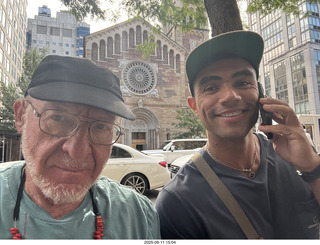 Except for two two-day visits to friends of mine
who moved to Manhattan last year,
I haven't been to New York City
since the World Trade Center was still there,
before 2001 September 11.
I have
oodles
of Broadway-show programs from the 1980s,
but I became much more of a show-music-dance-concert
buff
in the past two decades.
My two two-day visits were brief,
time with my friends, one
museum,
some good meals, and seeing our joint-venture business
Novapetal NYC.
Except for two two-day visits to friends of mine
who moved to Manhattan last year,
I haven't been to New York City
since the World Trade Center was still there,
before 2001 September 11.
I have
oodles
of Broadway-show programs from the 1980s,
but I became much more of a show-music-dance-concert
buff
in the past two decades.
My two two-day visits were brief,
time with my friends, one
museum,
some good meals, and seeing our joint-venture business
Novapetal NYC.
I have subscriptions to
Ballet Arizona,
the Phoenix Symphony,
the Philadelphia Ballet,
and
Arizona Opera
with memberships in the
Scottsdale Center for the Performing Arts,
the Mesa Arts Center,
the Chandler Center for the Arts,
and
Musicfest.
I'm an occasional concert-goer at
the Musical Instrument Museum (MIM)
the Celebrity Theater,
ASU Gammage,
and some big-arena, big-concert venues.
So maybe it's time to do the city,
six concerts in six days in Manhattan,
2026 January 18-23.
I scored tickets online for two operas and two ballets at
Lincoln Center
and two concerts at
Carnegie Hall.
My friend Warren recommended
the Empire Hotel
right across the street from Lincoln Center
which wasn't terribly expensive by New-York-City standards.
I recall my last visit to Lincoln Center was a tour in 1970
and I went to some concerts at Carnegie Hall
circa 1980.
As a Philadelphian by birth and a New Yorker
by immersive osmosis so many years ago,
I find my allegiance split between
Philadelphia's beautiful Academy of Music
with its crystal-clear opera-house acoustics
and New York's more-austere Carnegie Hall
with its genuinely-near-perfect concert-hall acoustics.
The Academy's shorter reverbation time may have been
hell-on-wheels for the musicians
of the Philadelphia Orchestra
for one hundred years but gave
an especially rich, intricate, and detailed portrayal
of the music to the audience
that Carnegie does not quite do.
I know it is possible to do both
as I heard the Royal Concertgebouw Orchestra
perform the Franck Symphony in
Amsterdam's Concertgebouw concert hall
which combines all the articulation and detail of the Academy
and all the concert-hall warmth of Carnegie.
When the Dutch music lovers got
what the phrenologist-psychologists call an "Edifice Complex"
and wanted to build a new concert hall,
they, instead, put a beautiful glass facade on one side
of the wonderful, old hall so not only is the sound the same
but I didn't have to wait outside in the rain to buy my tickets.
(If any orchestra program directors on my travel itinerary
are reading this, I'll point out
the Franck Symphony in D minor
is a wonderful work I've only heard that one time in a concert hall
and deserves to be played again.)
Here
are my photo slide-show pages from the trip.
2026 January 17, Saturday
Thursday night was Riccardo Muti
conducting the Chicago Symphony
at Mesa,
Friday night was Kirk Whalum
singing and playing the saxophone
at Chander,
and this day, Saturday, was my flight
from Phoenix Sky Harbor (PHX)
to Newark Liberty Airport (EWR)
and a drive into the city.
I noted that part of that drive was the "historic"
Pulaski Skyway,
a road I drove many times between 1974 and 1978
and a road mentioned in the historic
War-of-the-Worlds broadcast with Orson Wells
on 1931 October 30.
I had memories of the Holland Tunnel as well,
with a one-way toll of $1.50 instead of the current $15.00.
I was delighted to see that my hotel really was
right across the street from Lincoln Center
where I would be spending four nights attending
ballets and operas.
So often something is claimed to be
"right across the street" where the street being crossed
is quite some distance away.
The rooms were New-York-City small rooms
with a comfortable lobby and helpful staff.
2026 January 18, Sunday
Morning was a crosstown visit from my
former-Phoenician friend Anthony
who moved to New York City's upper east side
with his wife Olga to start
a retail flower shop
Novapetal NYC
following their successful Novapetal shop
in Phoenix.
Lunch was with a high-school friend David
I really hadn't seen
(except for brief hello-goodbye
greetings at class reunions)
and we had a delightful and
delightfully-brief recap of our careers.
At my age it's like the line in the movie
"Fun with Dick and Jane"
where the guy at the unemployment office says,
"Here you are what you were."
I chatted about the sale of my 2012 company
Clear Demand that did retail-science
pricing and promotions for big retail chains.
The opera was "I Puritani" (the Puritans),
about conflict between personal love and political-religious duty.
It was a long and wonderful opera followed by
a cast discussion that centered mostly around the
bel canto style of opera.
By evening I noticed New-York-City ads
on my social media of Facebook and Instagram,
a trickle that turned into a torrent.
I liked it because there were suggestions of things to do
that I didn't know about or didn't think of.
One just has to remember that more ads
or more-impressive ads doesn't necessarily equate
to a better place to visit.
2026 January 19, Monday
My day was consumed by the
American Museum of Natural History
on the Upper West Side of Manhattan,
not far from my hotel.
There were the usual famous attractions
like the dinosaur-fossil skeletons and a life-size blue whale.
I signed up for half a dozen special add-on exhibits and
displays including "Impact: The End of the Age of Dinosaurs,"
"Invisible Worlds,"
"Encounters in the Milky Way" in the planetarium,
and "Passport to the Universe" on the giant screen
narrated by Tom Hanks.
What I liked about the exhibits and presentations I saw there is,
unlike science-museum exhibits I've seen elsewhere this century,
there was some "meat on the bone."
I wasn't being talked down to
even though the subject was made accessible
to small children or adults with smaller minds.
Distances and quantities were given with some precision,
"hundreds of billions of stars,"
"tens of thousands of galaxies,"
"billions of light years,"
rather than platitudes I've heard about, say, Antarctica
where the ice was "very thick" with the tops "very high"
and the temperature "very cold."
It may be my memory failing me, but I sensed
a deeper sense of quantitative communication
even in these popular-science presentation media.
I enjoyed a post-museum, late-afternoon, pre-concert visit
with my friends Olga and Anthony and their son Anthony Jr.
in their new, upper-east-side apartment.
Since Anthony Jr. is my godson
I have to watch all those Marlon Brando movies.
The concert was two works by Sir Karl Jenkins
at Carnegie Hall,
rich, deep choral works brilliantly performed
with magnificent acoustics and the composer joining
the post-concert bows.
My seat neighbor was visiting from London,
so we were both coming from reasonably far away.
I liken the music to a PG-rated version
of Karl Orff's Carmina Burana,
rich and exciting without the vigorous sexual theme.
Both works were twelve movements with notations in the program
asking the audience to refrain from applauding between movements
and a master of ceremonies specifically making that point,
so the delicious silences between movements were untainted
by audience enthusiasm.
I'll point out that when the audience started to clap
after the first movement in Mesa last Thursday,
Riccardo Muti waved his hand behind his lower back,
the audience immediately got the message,
and the rest of the concert was similarly untainted.
Itzhak Perelman used to pretend to get a call
from Mr. Beethoven asking the audience to wait
until the end of the piece to applaud.
Ballet and opera and jazz are different where the audience
is expected to applaud after a solo or duet part of the program.
2026 January 20, Tuesday
I signed up for a tour of Carnegie Hall
with discussion of the hall's history and heritage.
There were stories of great effort to build this hall
and of great performers who played there.
The standard Q+A joke is
"How do you get to Carnegie Hall?"
and the answer is "Practive, practice, practice."
When the hall was slated for destruction in 1960
it was granted a last-minute stay of execution
so the sad, closing concert because a celebration
of the hall's future.
I recall a VHS tape I had
of comedian Alan King walking out onto the
Carnegie-Hall stage, looking up and down and left and right.
"Look, Ma, I made it. And I didn't have to practice."
Lunch was a couple of big-city, big pizza slices
at a small New-York pizzaria where I had to climb
a narrow stairway to the small tables.
"What they're spending on rent they're not spending on food,"
so New-York restaurants tend to be on the small side
with portions designed for large-size appetites.
A few blocks walk took to the
Museum of Modern Art (MOMA).
My hit-rate of liking the art there
may be lower than more-traditional-art museums,
but there are some beautiful pieces
and enough to keep me happily entertained for
a couple of hours.
The New York Ballet was an evening
of George Ballanchine.
If Philadelphia and Phoenix can go gaga over George B.,
then certainly I expect Ballanchine's own New York Ballet
to be ever-so-much-more-so enthusiastic about him,
and there is much to be enthusiastic about.
One piece, "Prodigal Son," I remember vividly from before
and this performance was just as wonderful.
Like in my other big-city ballet companies,
when eight dancers moved in unison or in a wave,
it was perfect, poetry in motion.
2026 January 21, Wednesday
One of the Facebook ads was for RiseNY,
a funky New-York-City-memories museum
complete with a moving seats video ride
through all five boroughs of the big city.
There were pictures and videos
of Times Square on New Year's Eve
and the Ed Sullivan show and the
famous skyscrapers.
There was an appropriate
display
of the World Trade Center two square holes in the ground
as it is at the actual memorial site.
The
movie ride
is a lot of fun.
I enjoyed my stroll up Fifth Avenue
to the Frick Collection.
My last time there was several decades ago with my mother,
but I remembered quite a few of the works of art.
Whatever renovations and innovations they may have done,
everything wonderful and lovely I remembered from decades ago
was still there, right in my face.
They had a no-pics-in-the-Frick policy
so I don't have any pictures of the pictures there.
(I probably could dig up images from the Internet,
but I'm too lazy to do that, at least for now.)
My second opera of the week was "Madama Butterfly,"
a tragic three-act story of cross-cultural betrayal.
The costumes and sets were absolutely wonderful
along with the music and vocals.
They had an angled stage-size mirror above the whole thing
so the audience could look down on the whole scene by looking up.
What's mind boggling to me is that the Metropolitan Opera
that just did "I Puritani" three nights ago managed to
squeeze a full performance of "Carmen" in between.
It's the same story with the ballet.
While Arizona and Philadelphia manage to do
maybe half a dozen shows spread out over the season
usually with a month or two in between,
the Metropolitan Opera and New York Ballet
find the resources to do multiple shows,
enough that I could schedule
two operas and two ballets all in one week in the city.
Since I have some idea how hard Arizona and Philadelphia
opera and ballet companies have to work to do their schedules
I'm trying to imagine the resources it takes to do
so many shows.
2026 January 22, Thursday
Since my last real time in the city had
the skyline dominated by the World Trade Center,
I figured a visit to the memorial site and museum
was in order.
2001 September 11 was a terrible day.
I'm old enough that there have been a few terrible days,
1963 November 22 was Kennedy's assassination in Dallas,
1968 April 4 was King's assassination in Memphis,
1968 June 5 was Robert Kennedy's assassination
in Los Angeles,
1969 July 18 was Ted Kennedy's car drowning
of Maryh Jo Kopechne in Chappaquiddick,
and
1986 January 28 was the Challenger space-shuttle explosion.
The last was the worst day of my professional life
(story some other time and place)
and then our group's youngest member
ran into the room and said, "The space shuttle blew up."
Really.
More-recent terrible days include
one or more U.S. Presidential elections
depending on which side you're on,
2020 was COVID,
2022 February 24 was Russia's invasion of Ukraine,
and
2023 October 7 was the Hamas invasion in Gaza.
There were also blizzard, hurricanes, tornados, earthquakes,
et cetera.
Still, 2001 September 11 sticks out as
especially awful, especially here in the United States,
and more-especially in New York City.
Blame Osama bin Laden or the
decision to have all airline-flight passengers helpless,
or blame it on ghosts and goblins,
"Nine Eleven" was an event where somebody did something
to make it happen.
It wasn't an accident of nature
like an earthquake in San Francisco in 1906
or a tornado in Fort Worth in 2000.
Its casualties were victims of something somebody did.
I have another connection with Nine Eleven.
When I was at the Observation Deck there a few years before
the elevators stopped working and
there were no stairs available.
The lights were still on but there were no elevators.
A few hundred of us were nervously milling around
the 107th floor.
Nobody said the word "fire."
What
else
would take out all the elevators and not the lights?
I looked out the window at the ground a quarter-mile down
and wondered what it would be like choosing between flames and
a thrilling
twelve-second
descent with a fatal sudden stop.
I suspect most of the others were thinking similar thoughts.
The World Trade Center memorial
is appropriate and tasteful.
The locations of the twin towers are maintained as pools of water
with names imprinted on the rims.
In the centers of these already-deep ponds
are deeper squares of runoff.
The new Freedom Tower is right next to this memorial,
but does not replace it in the exact same location.
The museum is underneath where the towers were before they fell,
so they have exhibits in the actual under-the-towers spaces.
There are actual firetrucks and actual pieces of metal and
lovely-before pictures and horrible-after pictures along with
a few of the actual event.
One of the museum docents I chatted with
lost her brother in the event,
so she had a lot more invested in the memorial
than almost anybody else would.
The journey from my hotel to the memorial
was a subway ride on the 1 train
downtown almost to the last stop.
I remember that same 1 train
going uptown took me to Van Cortland Park
in the north Bronx where we used to run
cross-country races.
The subway in 2026 has air-conditioned cars
with fluorescent lights,
different from the incandescent light bulbs
fifty years ago.
Those bulbs, they told me, deliberately screwed
the other direction from regular light bulbs so
subway riders wouldn't steal them to use in their
own apartments.
Instead of metal tokens access is controlled
by credit-card tap access.
I got back to my hotel in time to meet Walter,
a friend of my long-time patent-lawyer friend Dick
who created my first patent #4182517 for the LOCI Tonearm
back in 1978 and 1979.
Walter is doing exciting work in medical-science investment.
Getting people excited about investing in
high-payout opportunities with low probability of success
requires a long history of integrity and overall success.
There are many medical breakthroughs throughout history
that have relied on people making these high-risk investments.
Before my chamber-music concert I decided to try
dinner at the Carnegie Hall Weill Café,
an expensive meal where I met some interesting people
at the table next to mine.
There was some confusion as the dinner was timed around
an 8:00pm concert downstairs in the big Isaac-Stern auditorium
rather than my 7:30pm concert upstairs in the
smaller Joan and Sanford I. Weill Recital Hall,
but we made it all work.
The concert was a violin-harpsichord combination with a 'cello,
Rachell Ellen Wong on violin,
David Belkovski on harpsichord, and
Coleman Itzkoff accompanying on 'cello.
Most of the music was from J.S. Bach's time and earlier.
Except for
Johann Sebastian
this isn't a period of music I find myself
hearing
in the concert hall.
We hear The Four Seasons (1718-1723)
with some regularity
(twice in the past thirty years for me, I think),
an occasional piece by Telemann,
and, of course, Handel's beautiful
Messiah (1747) and,
occasionally, Water Music (1717).
Hearing two hours of new-to-me music from this era
was stimulating, entertaining, and utterly enjoyable.
There was one piece by Tartini nicknamed the "Devil's Trill"
where the violin and harpsichord were played quite rapidly.
While frantic, quick notes on violin are almost routine,
this harpsichord sequence would make many pianists envious.
The other five concerts I was able to get
front-row or near-front-row seats while this one
was sold out save one seat in the balcony's front row.
When I got there I saw a whole lot of empty seats.
Maybe a lot of people subscribe to these cool concerts
and then go someplace warm for the winter,
maybe Arizona, maybe Phoenix, maybe Scottsdale.
At least I had an empty seat next to me so I got
one armrest all to myself.
After the concert itself I asked
how much more difficult the showy-fast stuff was
than on a more-modern pianoforte.
He said it was quite hard and it was all about
"choreography" and that if he was in the wrong space or posture,
then it would be a rapid-fire sequence of wrong notes.
That didn't happen and the devil's trill was terrific.
The gathering after the concert was a lot of fun.
The violinist's sister had a love of astronomy
and I ran into a young audiologist who seemed to recall
my father's work in the field back in the 1950s.
This day was particularly nice in terms of temperature,
right around freezing, warm enough for no gloves.
The next day was ten degrees colder (10°F)
with enough breeze to gloves a must-have item for me.
2026 January 23, Friday
I joined Olga and Anthony for lunch
at our Novapetal NYC flower shop.
We went to a local Chinese restaurant
and had a delicious meal.
After that I walked about a mile
to the Metropolitan Museum of Art.
There's always one more thing to see
and it's all wonderful and amazing.
After a quick dinner back on the upper east side
with Olga and Anthony I headed back to the west side
for my sixth of six consecutive-day concerts,
this one the New York Ballet "Masters at Work II."
There were four nearly-half-hour ballets, all new to me,
"Kammermusik No. 2,"
"Le Tombeau de Couperin,"
"Antique Epigraphs," and
"Raymonda Variations,"
with music by four wonderfully-different composers,
Paul Hindemith,
Maurice Ravel,
Claude Debussy, and
Alexander Glazounov (from Raymonda it says on the program).
Intermissions were after the first and third for a lovely evening
and my seat neighbor was friendly.
There is an ice-cream place
next to the Empire Hotel
open after concerts
(they're smart)
that makes their ice-cream cones
with rose petals by scooping the ice cream in layers.
Lacking rocky road I settled for chocolate
to top off my perfect night and my perfect week
of New-York-City concert nightlife.
2026 January 24, Saturday
Since I arrived in New York City
the cyber spies in my social media
were clearly aware of my new geographic location.
I have been deluged with advertisements
for museums and monuments,
none more than the new Arte Museum,
a lights-and-mirrors environment on Pier 61.
After my success following the advertisements for RiseNY
on Wednesday,
I decided to spend my last morning at this
Arte Museum.
I wasn't disappointed.
The first dark room was all mirrors with lighted water flow
going up and down repeatedly up and down and left and right
and front and back all over.
There were rooms with floral displays
and other kids-oriented light shows.
I was ready to suggest this as a place to take
my two-year-old godson for an outing.
The last room didn't change my godson recommendation,
but it certainly changed my impression of the place.
It was lovely.
There was a mix of New-York-City urban scenes
from subways to streets with famous paintings
dropping down and going up and coming and going.
Rather than a barrage of pointless images,
it was a montage of reality and artistic beauty
well worth visiting
for kids from one to ninety-two.
For those of us not doing too well standing for several minutes
there were places to sit and to enjoy the ever-changing view.
I stayed for a while and it didn't repeat
for the fifteen or twenty minutes I enjoyed watching it.
So this well-advertised Arte Museum was fun and terrific.
Lunch was a nice chopsticks-only oriental restaurant
and my flight home from Newark (EWR)
to Phoenix (PHX) was uneventful.
What was more eventful was the number of flights
that weren't flying because of the forecast blizzard
that lived up to promise of coating
the United-States eastern-seaboard with a lot of snow.
I got home tired and decidedly
"under the weather" and took a couple of days
to recuperate and to restore my energy.
My cats were there to greet me.
2026 January 25, Sunday
In case I'm suffering from a shortage of concerts,
Sunday afternoon was a concert at the Nash Jazz Club
in the heart of Phoenix
with sort-of-jazz-singer, sort-of-folk-singer Annie Moscow.
I've been listening to her and her compact disks (CDs)
since 2009 May 16 at Angel's Serenity,
a hippie-style store some friends of ours
kept in Scottsdale back then.
The store is gone, our friends have moved to Boston,
but Annie and I are still friends
and I go to her concerts whenever I can.
Her music is part of me and it was a nice pick-me-up way
to spend a not-feeling-too-perky Sunday afternoon.
_
THE ADAM HOME PAGE
adam@the-adam.com
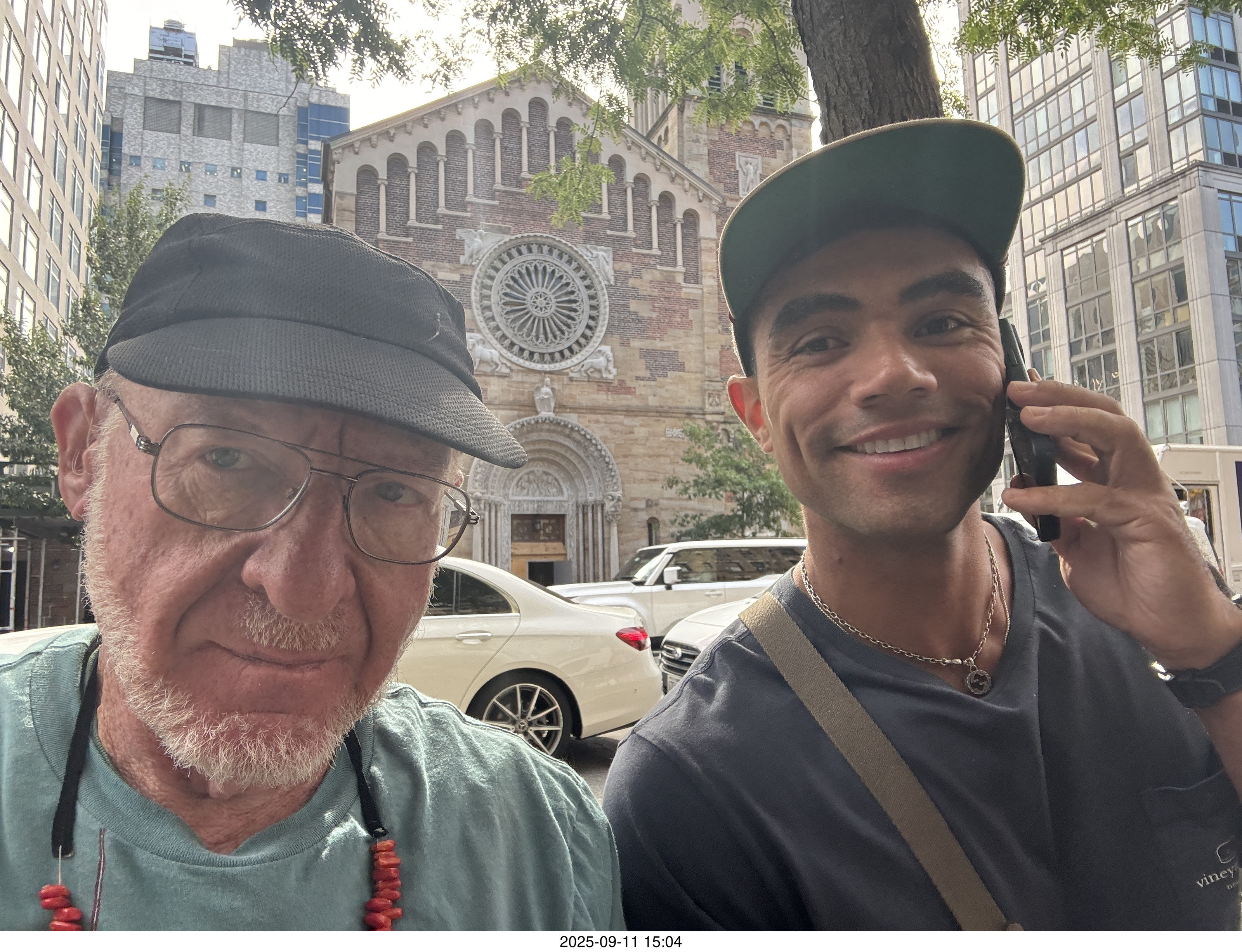 Except for two two-day visits to friends of mine
who moved to Manhattan last year,
I haven't been to New York City
since the World Trade Center was still there,
before 2001 September 11.
I have
oodles
of Broadway-show programs from the 1980s,
but I became much more of a show-music-dance-concert
buff
in the past two decades.
My two two-day visits were brief,
time with my friends, one
museum,
some good meals, and seeing our joint-venture business
Novapetal NYC.
Except for two two-day visits to friends of mine
who moved to Manhattan last year,
I haven't been to New York City
since the World Trade Center was still there,
before 2001 September 11.
I have
oodles
of Broadway-show programs from the 1980s,
but I became much more of a show-music-dance-concert
buff
in the past two decades.
My two two-day visits were brief,
time with my friends, one
museum,
some good meals, and seeing our joint-venture business
Novapetal NYC.